
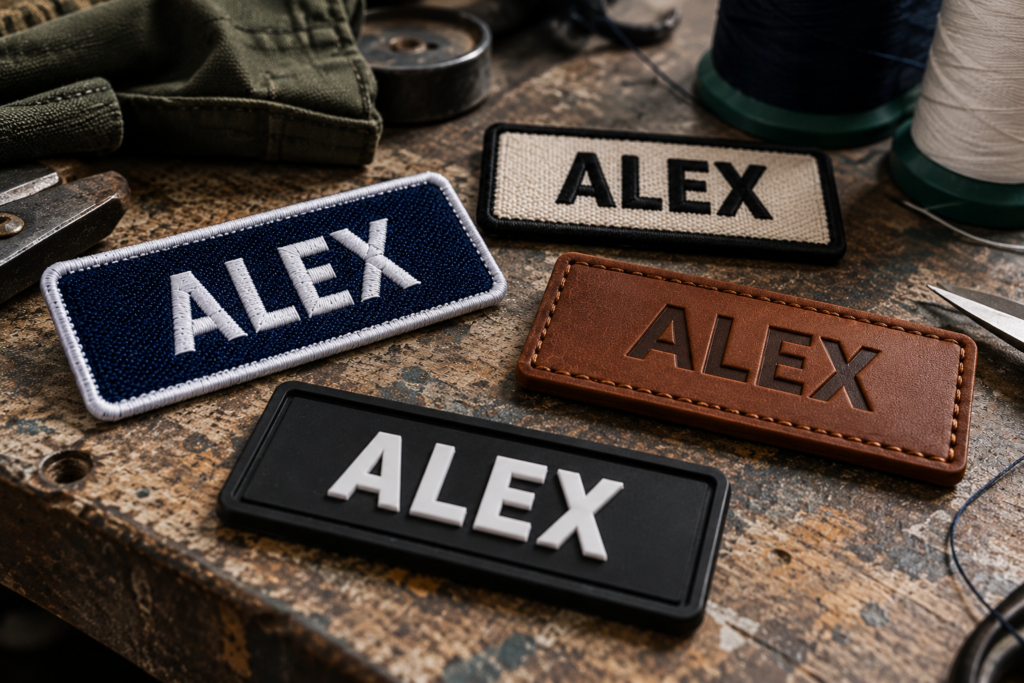
Custom name patches display names, job titles, or other identifying information on uniforms, workwear, jackets, and bags. Choosing the right patch depends on its construction, lettering, backing, and how the garment will be used.
Custom name patches are available in embroidered, woven, PVC, and other styles. Embroidery provides a textured finish, while woven construction can accommodate finer lettering. Your choice should depend on the design, fabric, and intended use.
Sew-on backing suits permanent attachment, iron-on backing works with compatible fabrics, and hook-and-loop backing allows names to be removed or replaced. Before ordering, consider patch size, text readability, washing requirements, and the number of different names you need.
Need Custom Name Patches for Your Team?
Looking for name patches for uniforms, workwear, jackets, or bags? Share your requirements, preferred patch style, quantity, and backing with The Embroider to request a quote.
Request a Quote for Custom Name Patches
What Are Custom Name Patches?
Custom name patches display a person’s name, job title, team role, or other identifying information on clothing and equipment. They can be embroidered, woven, or made from materials such as PVC or leather, depending on the desired appearance and application.
Businesses use them to identify employees, schools add them to uniforms, and sports teams use them on jackets and equipment. They can also personalize backpacks, bags, and everyday clothing.
Custom name patches come in different shapes, sizes, colors, fonts, and attachment styles. Some display only a first or last name, while others include a job title, department, or small logo.
If you are comparing options for a larger patch project, explore our custom patches to learn more about the patch options available.
The best design is not always the most detailed. Lettering must remain readable at the intended viewing distance, and the backing must suit the garment.
Different Types of Name Patches
The construction method affects a patch’s texture, level of detail, and appearance. These are the main options to consider.
1. Embroidered Name Patches
Embroidered name patches use thread stitched onto a fabric base. The stitching creates a textured appearance that works well for uniforms, workwear, jackets, and team apparel.
Custom embroidered name patches can feature different thread colors, lettering styles, borders, and shapes. They are a practical choice when you want a traditional stitched finish.
However, very small letters and thin strokes can be difficult to reproduce clearly. Longer names may need a wider patch to keep the lettering readable.
2. Woven Name Patches
Woven patches use fine threads woven together rather than raised embroidery stitches. Their flatter surface can accommodate smaller lettering and finer details.
They may suit designs with narrow text, compact lettering, or details that are difficult to reproduce clearly with embroidery. The result still depends on the design, material, and production method.
3. PVC and Leather Name Patches
PVC patches have a molded, rubber-like appearance and are often used on tactical equipment, outdoor gear, and selected uniforms. Leather patches provide a different finish that can suit jackets, bags, and casual apparel.
These materials are worth considering when a traditional embroidered appearance is not the desired look. Check that the material, lettering, and attachment method suit the intended garment or equipment.
Customization Options for Name Patches
Before choosing a patch, consider how its lettering, colors, and dimensions will look on the finished garment.
Font and Lettering
Bold, simple fonts are generally easier to read at smaller sizes than thin or highly decorative lettering. Script fonts may suit personal items, but they can be harder to read on uniforms when the text is small.
When designing personalized embroidered name patches, check the longest name in the group rather than designing around the shortest one. Long surnames may need a wider patch or a more compact typeface.
Custom embroidered name patches can be personalized with different fonts, thread colors, and background colors to match a uniform, brand, or personal style.
Color and Contrast
The name should stand out from the patch background. Dark lettering on a dark background or light lettering on a light background can make identification difficult.
For teams and businesses, choose colors that match the garment while maintaining enough contrast for the text to remain readable.
Size and Shape
A narrow rectangular patch may suit a name on a shirt chest, while a larger format may be needed for a name and job title together. Oval and custom-shaped patches can also work when the design calls for them.
Measure the available space before deciding on dimensions. A design that looks clear on a computer screen may become difficult to read when reduced to its actual size.
Name Patches for Uniforms and Workwear
Uniform patches need to be readable, appropriate for the garment, and suitable for regular use. When choosing uniform name patches, consider the fabric, lettering, attachment method, and frequency of washing.
Embroidered Name Patches for Uniforms
Embroidered name patches for uniforms are commonly used in hospitality, schools, maintenance teams, retail, and other workplaces where identifying staff is useful.
A patch can display a person’s name, role, or department. For a consistent appearance across a team, keep the font, dimensions, border, and placement uniform.
Consistent lettering, colors, and placement help maintain a professional appearance across staff clothing.
Work Uniform Name Patches
Work uniform name patches can identify employees in workshops, warehouses, field services, restaurants, and other workplaces. The right construction depends on the working environment and the garment.
For example, a patch on an occasionally worn jacket may have different requirements from one attached to workwear used in demanding conditions.
Before ordering, confirm the number of employees, the list of names, the preferred patch dimensions, and the attachment method. This helps prevent spelling mistakes and inconsistent designs across the order.
Choosing Patches for Different Uniforms
Different working environments can affect patch selection.
When comparing uniform name patches, consider the workplace dress code, patch placement, and how clearly the name needs to be seen.
- Office and hospitality uniforms: Prioritize clear lettering and a neat appearance.
- Industrial workwear: Consider frequent use, abrasion, and secure attachment.
- School uniforms: Check fabric compatibility, placement rules, and whether names should remain permanent.
- Team uniforms: Maintain consistent designs and decide whether individual names need to be changed later.
Sew-On vs. Iron-On Name Patches
Backing determines how a patch attaches to a garment. The right option depends on the fabric, expected wear, and whether the name needs to be removed.
| Backing type | Best suited for | Main consideration |
| Sew-on | Permanent placement on uniforms and workwear | Requires stitching |
| Iron-on | Compatible fabrics and convenient application | Heat can damage some materials, and adhesive may weaken |
| Hook-and-loop (Velcro) | Removable names on compatible garments or gear | Requires a matching attachment surface |
Sew-On Name Patches
Sew-on name patches are a good option when the name should remain attached to the garment. Stitching secures the patch to the fabric without relying solely on heat-activated adhesive.
This method can suit uniforms, jackets, and workwear that receive regular use. The result depends on the stitching, fabric condition, and patch construction.
Iron-On Name Patches
Iron-on name patches use heat-activated adhesive to attach to compatible fabrics. They can be convenient when sewing is not preferred, but they are not suitable for every material.
Always check the patch and garment manufacturer’s instructions before applying heat. Delicate fabrics, heat-sensitive synthetics, and some coated materials may be damaged by an iron or heat press.
For garments that are washed frequently, additional stitching may be appropriate if the patch construction and fabric allow it.
Which Backing Should You Choose?
Choose sew-on backing when you want permanent attachment and can stitch the patch securely. Consider iron-on backing when the fabric is compatible and the manufacturer permits heat application. Choose hook-and-loop backing when a name needs to be removed or replaced.
There is no single backing that suits every garment. Fabric compatibility, washing requirements, and intended use should guide the decision. For more details on attachment options, explore our sew-on, iron-on, and Velcro patches to compare backing choices for your project.
Need Help Choosing a Patch Style?
If you are unsure which patch construction or backing suits your project, share the garment type, intended use, and quantity with The Embroider. These details can help clarify which options are appropriate for your requirements.
Discuss Your Patch Requirements
Name Patches for Jackets and Backpacks
Name patches are also used on personal clothing, bags, and outdoor equipment. These applications may require different dimensions and attachment methods from standard uniform patches.
Name Patches for Jackets
Patches for jackets can display a person’s name, a team role, or a short identifying phrase. They may be placed on the chest, sleeve, or another suitable area, depending on the garment and design.
Before choosing a backing, check the jacket’s fabric and lining, the available attachment area, and how the garment will be cleaned. Thick, waterproof, or coated materials may require special care when selecting an attachment method.
For team or branded apparel, name patches for jackets can use matching colors and lettering to maintain a consistent appearance across garments.
Iron-On Name Patches for Backpacks
Iron-on name patches for backpacks can help identify school bags, travel bags, and other personal gear, but the material matters. Many backpacks use nylon, polyester, coatings, or layered construction that may not tolerate direct heat.
Before choosing iron-on name patches for backpacks, confirm that the bag’s outer material can tolerate the required application heat.
Check the manufacturer’s instructions for both the bag and the patch before applying one. If heat application is unsuitable, consider a sew-on patch where the material permits stitching, or a removable tag designed for the bag.
The safest choice is the one compatible with the backpack’s material and intended use, not simply the easiest one to apply.
Not sure whether sewing is a better option? Read our guide to sewing a patch onto a backpack for more information.
How to Choose the Right Name Patch
Use these considerations to narrow down your options before ordering.
- Where will the patch be used?
Identify the garment or equipment first. A uniform chest patch, jacket patch, and backpack patch may need different dimensions and attachment methods.
- How detailed is the name or design?
Short names are easier to fit into narrow spaces. Long names, job titles, and small logos may require a wider patch or a construction method that supports finer details.
Does the patch need to be removable?
Choose permanent attachment for names that stay with the garment. If names need to change between staff members, consider a compatible hook-and-loop system.
- What conditions will the patch face?
Consider daily wear, friction, and the working environment when choosing a patch construction that suits its intended use.
- How many different names are required?
Prepare a complete, proofread name list before ordering. Ask the supplier how it handles different names, minimum quantities, and setup requirements, since these policies vary.
What Affects the Cost of Custom Name Patches?
The cost of custom name patches depends on several factors:
- Size: Larger patches use more material and may require more stitching.
- Construction: Embroidered, woven, and specialty materials have different production requirements.
- Design complexity: Small lettering, detailed borders, and additional design elements may affect production.
- Backing: Sew-on, iron-on, and hook-and-loop options may have different costs.
- Quantity: Pricing structures and minimum order requirements vary between suppliers.
- Number of unique names: Some suppliers treat every name as a separate design, while others handle multi-name orders differently.
Request a quote based on your actual requirements rather than comparing prices without checking the specifications. Confirm the dimensions, materials, backing, quantity, proofing process, and estimated production and shipping times.
What to Prepare Before Ordering
A little preparation can help reduce mistakes and delays. Before placing an order, prepare:
- A final list of names with correct spelling and capitalization.
- Preferred patch dimensions and shape.
- Font and color preferences.
- The garment or equipment where each patch will be used.
- The preferred backing or attachment method.
- Required quantity and delivery timeframe.
- Any logo or artwork that needs to appear alongside the name.
For team orders, confirm how individual names will be handled and review the final proof, if provided, before approving production.
Conclusion
Choosing the right name patch comes down to the intended use, lettering, material, backing, and care requirements. Embroidery provides a textured appearance, woven construction can support finer details, and different attachment methods suit different garments.
Compare these factors before placing an order, especially when buying for a team or workplace. A clear name list, suitable dimensions, and a compatible backing can help prevent common design and application problems.
Ready to Order Custom Name Patches?
Share your name list, preferred patch style, quantity, and backing requirements with The Embroider to discuss your project and request a quote.
Submit Your Enquiry.
FAQs
What are custom name patches used for?
Custom name patches identify people, roles, teams, and departments on uniforms, jackets, bags, and workwear. They can also personalize clothing and equipment.
Are embroidered name patches durable?
They can be durable when the patch construction, backing, stitching, and care instructions suit the intended use. Durability varies with materials, washing frequency, and daily wear.
Are sew-on name patches better than iron-on patches?
Neither option is best for every situation. Sew-on patches suit permanent attachment, while iron-on patches can be convenient for compatible fabrics. Choose based on the garment and how it will be used.
Can I use iron-on name patches on a backpack?
It depends on the backpack material and the patch’s adhesive. Some synthetic fabrics and coatings may be damaged by heat, so check the manufacturer’s instructions before application.
What size should a name patch be?
The right size depends on the placement area, the length of the name, and whether additional information is included. Measure the available space and check that the lettering remains readable at its actual size.
Can name patches be washed?
Many name patches can be washed, but the suitable method depends on their construction and attachment. Follow the garment and patch care instructions, and avoid assuming every adhesive backing can withstand the same washing conditions.
Can a patch include a name and job title?
Yes, if the dimensions and lettering allow enough space for both. A wider patch or a simplified layout may be needed to keep the text readable.
What should I provide when ordering custom name patches?
Prepare the name list, preferred size, colors, patch type, backing, quantity, and intended application. If you are including a logo, provide the artwork and ask whether a proof is available before production